Weather Art — 2026-03-16-182419 inspired by Lesley Tannahill

Arctic 60n 130w
Over the Arctic Ocean northwest of Great Bear Lake in Canada's Northwest Territories, an extreme cold mass meets unusually high humidity, creating atmospheric tension in this remote polar region. The dangerously low temperature of -12 Kelvin (around -285°C) with its significant anomaly drives a palette of deep crystalline blues and whites, while the high humidity and light precipitation manifest as layered, translucent forms that accumulate like ice crystals. The moderate easterly wind and low pressure create gentle but persistent movement through densely stratified compositions, evoking Tannahill's palimpsest technique where frozen atmospheric layers reveal and conceal each other in an endless cycle of formation and dissolution.

Arctic 60n 70w
Over the frozen waters of Baffin Bay, west of Greenland, an extreme arctic system creates a visual palimpsest of memory and forgetting. The remarkably high pressure and gentle winds suggest a stable, contemplative atmosphere, while the brutal cold and high humidity manifest as dense, layered forms that accumulate like sediments of thought. Following Tannahill's approach of reworking surfaces over time, I've created overlapping geometric fragments that emerge from and dissolve back into clouded fields, with cool grays and blues punctuated by warmer undertones that hint at the cognitive processes beneath the surface calm.

Arctic 60n 90e
Over the remote Arctic Ocean at 60°N, 90°E, where the Kara Sea meets the polar ice cap, extreme cold meets near-perfect humidity in a landscape of crystalline suspension. The moderate pressure gradient and gentle southeasterly winds create subtle atmospheric movements, while the temperature anomaly of nearly 30 degrees above the zonal mean suggests a complex interplay of warming currents beneath the frozen surface. This palimpsest composition layers translucent geometric fragments that emerge and dissolve like ice formations viewed through multiple atmospheric lenses, with cool blues and whites dominating the palette while warmer undertones hint at the temperature anomaly breaking through the arctic stillness.

Arctic 70n 20w
Over the Greenland Sea in the Arctic Ocean, where ice meets open water under perpetual twilight, extreme atmospheric forces create a landscape of constant transformation. The powerful 16.6 m/s winds from the north and high humidity of 94% generate dynamic layers of movement, while the significant temperature anomaly suggests unusual warmth breaking through the Arctic cold. Following Tannahill's approach of layered palimpsests, I've created overlapping geometric fragments that emerge and dissolve into abstract fields, with wind-driven diagonal sweeps cutting through dense accumulations of form, representing the tension between chaotic atmospheric input and the structured patterns that emerge from Arctic weather systems.

Arctic 70n 60e
Over the Barents Sea in the high Arctic, where icy waters meet the edge of the polar ice pack, extreme atmospheric conditions create a landscape of perpetual transformation. The crushing low pressure system and bitter cold temperatures drive my composition toward dense, layered accumulations of geometric fragments, while the high humidity and light precipitation manifest as translucent veils that obscure and reveal underlying forms. Following Tannahill's palimpsest approach, I've built up multiple strata where earlier angular marks pierce through softer, more organic layers, creating a visual archaeology of this harsh polar environment.

Europe 45n 30w
Over the North Atlantic approximately 800 kilometers west of the Bay of Biscay, moderate winds and shifting pressure create a dynamic atmospheric canvas. The 18.9 m/s winds from the northwest drive diagonal energy across the composition, while the moderate pressure gradient generates layered densities that build and dissolve like Tannahill's palimpsestic surfaces. The cool temperature and moderate humidity inspire a restrained palette of blues and grays with subtle warm undertones, where fragments of geometric structure emerge from and retreat into atmospheric abstraction.
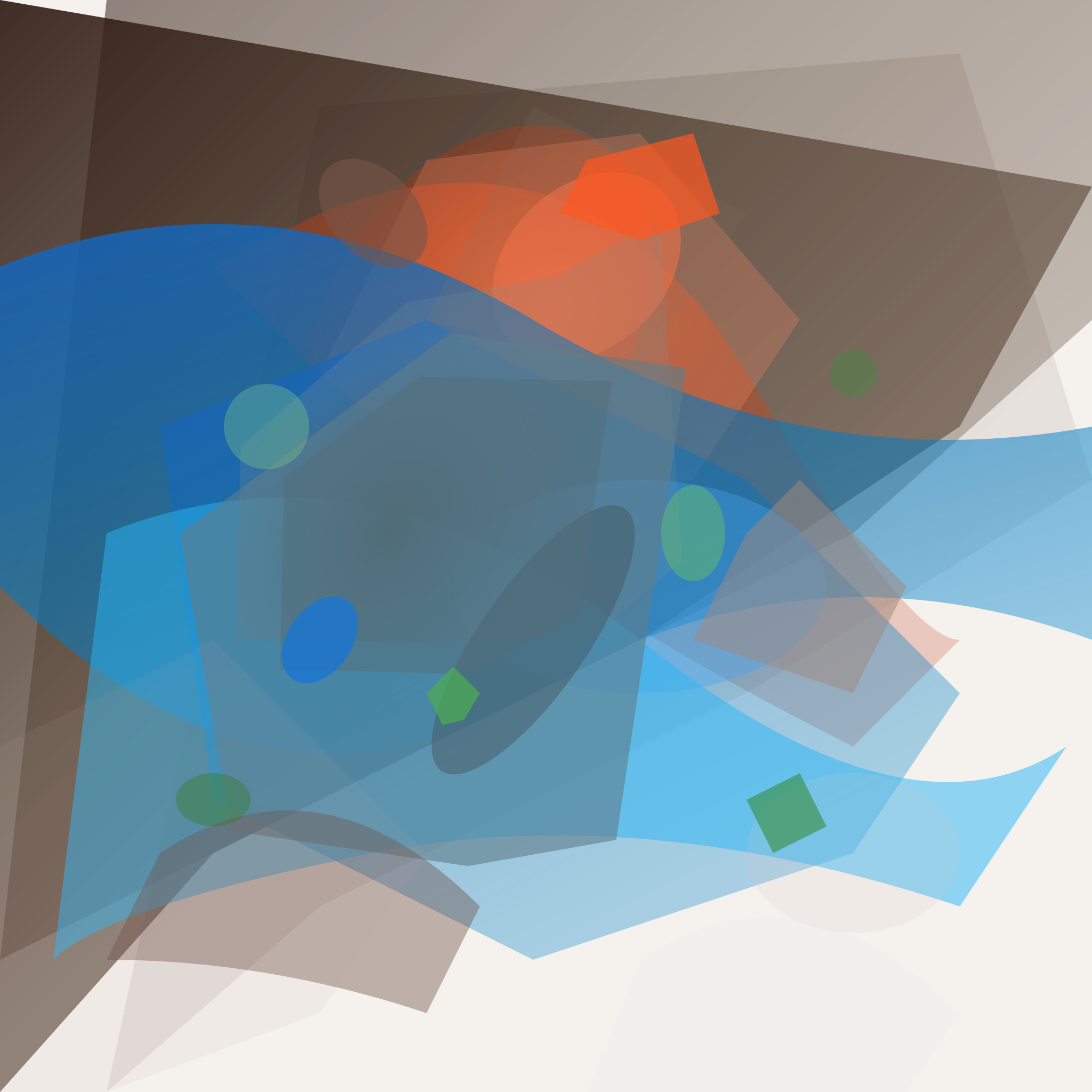
Maritime Continent 15s 80e
Over the maritime continent southeast of Java in the Indian Ocean, where warm tropical waters meet complex atmospheric dynamics, moderate winds from the southeast carry moisture-laden air across this humid region. The substantial pressure gradient and high relative humidity, combined with the temperature anomaly above the zonal mean, suggest active convective processes and layered atmospheric complexity that I interpret through Tannahill's palimpsest approach - building dense, reworked compositions where geometric fragments emerge from and dissolve into abstract fields, with the wind's directional energy creating diagonal tensions across accumulating layers of translucent forms.

Region 60s 0e
Over the Southern Ocean at 60 degrees south latitude, directly south of the Atlantic-Indian Ocean boundary, fierce westerly winds carve through a landscape of perpetual storm systems and towering swells. The moderate low pressure system with its strong 15.4 m/s winds from the southwest creates a composition of dynamic, diagonal sweeping gestures that slice through dense atmospheric layers, while the surprisingly warm temperature anomaly of 12.9K above normal generates unexpected bursts of saturated color emerging from the typically austere Antarctic palette. Following Tannahill's approach to palimpsestic layering, I've built up translucent geometric fragments that reference both the crystalline structure of ice and the fluid dynamics of wind shear, with earlier pale marks showing through later intense color fields to suggest the complex interplay between memory and immediate sensation in this remote maritime environment.

Tropical South America 15s 70w
Over the high Andes of Bolivia and Peru, where thin air meets extreme altitude, the atmospheric data reveals a landscape of contradictions—extremely low pressure combined with frigid temperatures and dry conditions, yet with gentle winds that barely stir the rarefied atmosphere. Drawing from Tannahill's practice of layered palimpsests, I've created a composition where fragmented geometric forms emerge and dissolve through translucent veils, with the low pressure manifesting as dense, overlapping shapes that seem to compress and release like memories surfacing through consciousness. The cold temperature anomaly drives a palette of deep purples and blues, while the gentle wind creates subtle, organic undulations that soften the rigid geometry, mimicking how thought patterns shift between structured analysis and intuitive flow.

Western Pacific 0n 140e
Over the vast Western Pacific near the equator and 140 degrees east longitude, where tropical waters meet dynamic atmospheric forces, moderate winds carry moisture-laden air through a landscape of shifting pressure gradients. The relatively low sea-level pressure with its strong gradient creates a sense of compressed energy, while the high humidity and precipitation suggest layers of translucent veils moving through space. Following Tannahill's approach to palimpsestic layering, I've built dense accumulations of semi-transparent forms that reference both the chaotic input of weather data and the structured output of cognitive processing, with fragments of geometric order emerging from and dissolving back into organic atmospheric fields.