Weather Art — 2026-03-18-005530 inspired by Lesley Tannahill

Arctic 60n 130w
Over the remote Arctic Ocean northwest of Canada's mainland, where sea ice meets endless sky, the atmosphere carries an unusual warmth anomaly of over 21 degrees above normal, creating a dynamic tension between expected frigidity and unexpected thermal energy. The extremely low pressure system at 878.2 Pa generates a dense, weighty presence in the composition, while the gentle 2.5 m/s winds from the northeast and high humidity create subtle movement through layered, translucent forms. I've interpreted this as a palimpsest of memory and cognition—fragments of ice-blue geometric structures emerging from and dissolving into warmer amber and coral fields, with earlier cold marks showing through later warm layers, reflecting the cognitive dissonance between what should be and what is in this changing Arctic landscape.

Arctic 60n 140e
Over the Chukchi Sea in the Arctic Ocean, north of eastern Siberia, a powerful low-pressure system churns through the polar darkness. The extreme low pressure of 934.9 Pa creates a dense, gravitational pull in the composition, while moderate winds from the east drive horizontal stratifications across the canvas. The surprisingly warm temperature anomaly of 15K above normal, combined with near-saturated humidity, manifests as layered veils of color that obscure and reveal underlying geometric structures, creating Tannahill's characteristic palimpsest effect where memory and immediate sensation blur together.
Arctic 60n 70w
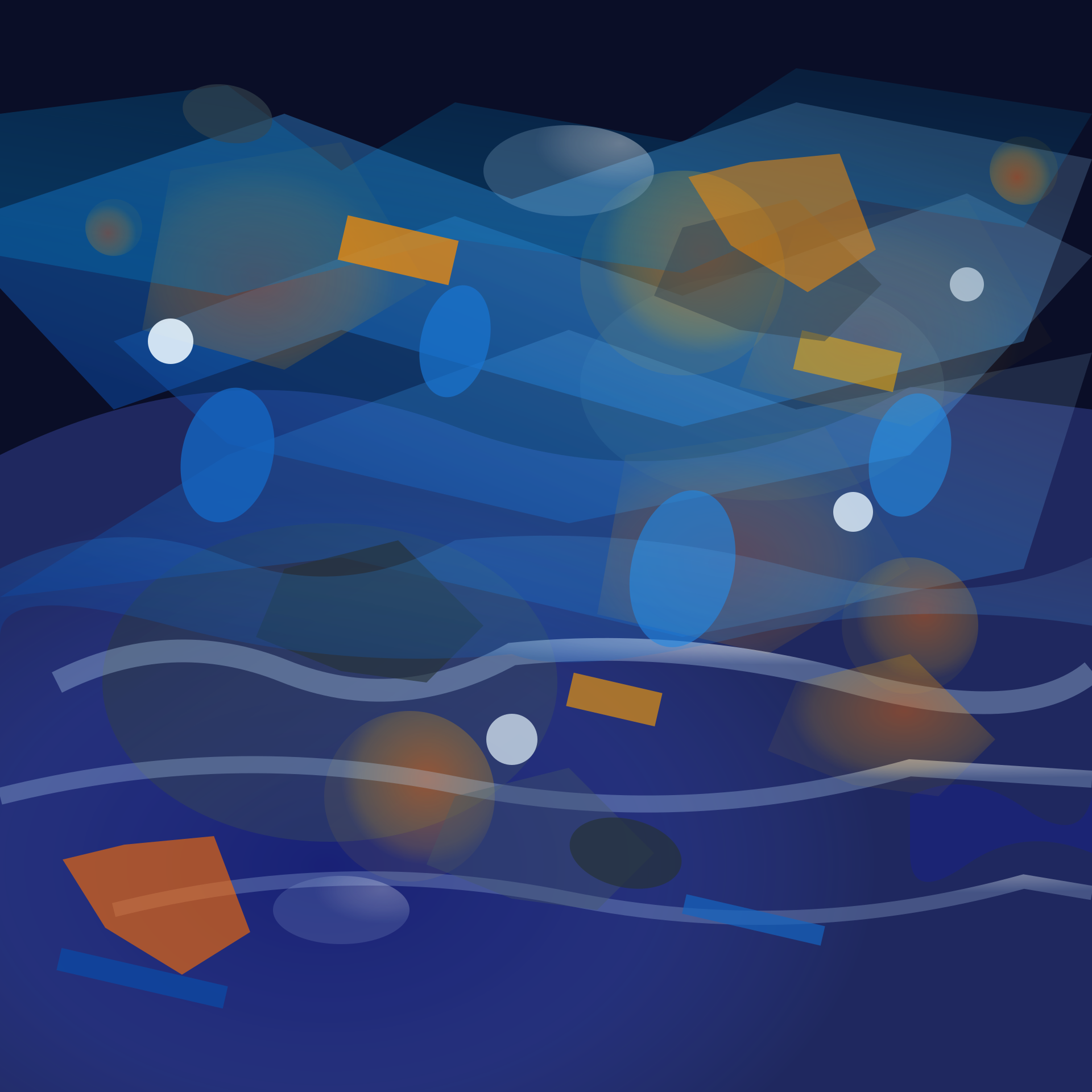
Over the frozen waters of Baffin Bay between Greenland and northern Canada, intense arctic winds clash with the dramatic temperature anomaly and saturated atmospheric moisture. The powerful 22.8 m/s winds from the northeast create dynamic diagonal forces that tear through the composition, while the extreme -16K temperature with its significant 28.3K anomaly generates stark contrasts between frigid blues and unexpected warm undertones. The 94% humidity and precipitation manifest as dense, layered accumulations that obscure and reveal geometric fragments beneath, echoing Tannahill's palimpsest approach where each atmospheric layer becomes a mark in an evolving visual memory of this harsh arctic moment.

Arctic 70n 20w
Over the Greenland Sea in the high Arctic, where frigid waters meet the persistent twilight of polar latitudes, a complex atmospheric disturbance unfolds with surprising warmth anomalies cutting through the bitter cold. The dynamic wind patterns and high humidity create a palimpsest of energy, while the deep low pressure system anchors dense, layered forms that speak to Tannahill's exploration of memory and reconstruction. I've interpreted this as overlapping geometric fragments that emerge and dissolve, with cool blues and whites dominating the palette but punctuated by warmer undertones representing the significant temperature anomaly—creating that tension between chaotic atmospheric input and the structured visual output that defines her aesthetic.

Arctic 70n 60e
Over the Barents Sea north of Russia, where the Arctic Ocean meets the edge of continental landmass, extreme cold and complete humidity create a crystalline atmosphere of suspended moisture. The moderate pressure gradient and gentle eastward winds suggest a stable but dynamic system, while the severe temperature anomaly of 41.8K below normal indicates an intense polar vortex event. I've interpreted this as a palimpsest of ice formations and atmospheric pressure waves, with layered geometric fragments that emerge and dissolve like memory traces in Tannahill's work—dense accumulations of translucent shapes representing the saturated air, punctuated by sharp crystalline forms that echo the extreme cold and the structured chaos of Arctic weather systems.

Central Asia 30n 70e
Over the high-altitude plateaus of Central Asia, near the border regions of Afghanistan and Pakistan, extremely cold air masses create a landscape of cognitive fragmentation. The exceptionally low temperature of 9.7 K and moderate humidity generate layered crystalline formations, while gentle winds from the northwest suggest subtle directional flow through accumulated sediments of visual memory. Following Tannahill's palimpsest approach, I've constructed overlapping geometric fragments that emerge and dissolve—representing the tension between the harsh environmental data and the structured patterns of thought, where recognition flickers between geometric precision and atmospheric dissolution.

Maritime Continent 15s 80e
Over the Maritime Continent southeast of Java, where the Indian Ocean meets complex island topography, moderate winds from the east-southeast carry humid tropical air across warm waters. The substantial temperature anomaly and high humidity create a dense atmospheric layer, while light precipitation suggests the early stages of convective activity typical of this region's monsoon patterns. I've interpreted this through Tannahill's approach of layered palimpsests—building up translucent geometric fragments that emerge and dissolve, with the moderate wind energy creating diagonal tensions across the composition, the pressure gradient forming dense clustered forms, and the high humidity rendered as overlapping translucent veils that obscure and reveal underlying structures.

Region 60s 0e
Over the Southern Ocean at 60 degrees south latitude on the Prime Meridian, where the fierce westerly winds of the Roaring Sixties collide with Antarctic waters, a dynamic low-pressure system churns with almost saturated air and minimal precipitation. The significant temperature anomaly of 12 degrees above normal suggests a complex atmospheric disturbance in this remote polar region. I've interpreted this meteorological chaos through Tannahill's layered palimpsest approach, building dense geometric fragments that emerge and dissolve like wind-torn clouds, with the high wind speed driving angular, directional movements across a composition weighted by the deep low pressure and softened by the near-saturated humidity.

Tropical South America 15s 70w
Over the high Andes of southern Peru and Bolivia, where extreme altitude creates an otherworldly atmospheric environment, the exceptionally low sea-level pressure and cold temperatures reflect the thin air and harsh conditions of this montane landscape. The moderate wind from the south-southwest and moderate humidity levels, combined with the stark temperature anomaly, inspire a composition of fragmented geometric forms emerging from dense, layered fields—like memories of warmth struggling through the cold, crystalline air of the altiplano. Following Tannahill's approach of palimpsestic layering, I've created overlapping planes of cool blues and purples with occasional warm fragments breaking through, using the pressure gradient to drive the density of marks and the wind direction to guide the subtle diagonal flow of elements across the canvas.

Western Pacific 0n 140e
Over the western Pacific Ocean at the equator, east of the Philippines and north of Papua New Guinea, moderate winds from the northwest carry warm, humid air across vast stretches of open water. The relatively high pressure gradient creates a sense of atmospheric tension while light precipitation hints at the tropical convergence zone's influence. Drawing from Lesley Tannahill's palimpsestic approach, I've layered geometric fragments and organic forms that emerge and dissolve, with the warm temperature anomaly expressed through deep oranges and reds bleeding through cooler oceanic blues, while the wind's northwest direction drives diagonal movements across the composition.