Weather Art Archive
2026-03-16-174254 Mark Rothko

Arctic 60n 130w
Over the remote Arctic Ocean northwest of the Mackenzie Delta in Canada, this location experiences an extreme atmospheric event with exceptionally low pressure and bitter cold temperatures creating an otherworldly polar environment. The crushing low pressure of 875.6 Pa becomes the foundation for deep, weighty color fields that seem to press down from above, while the extreme cold of -12.6 K transforms into luminous blues and purples that glow with an ethereal inner light. The high humidity and light precipitation manifest as soft, diffused edges between color bands, creating the contemplative, immersive quality characteristic of Rothko's work, while the gentle wind adds subtle movement to the floating rectangular forms.
Arctic 60n 70w
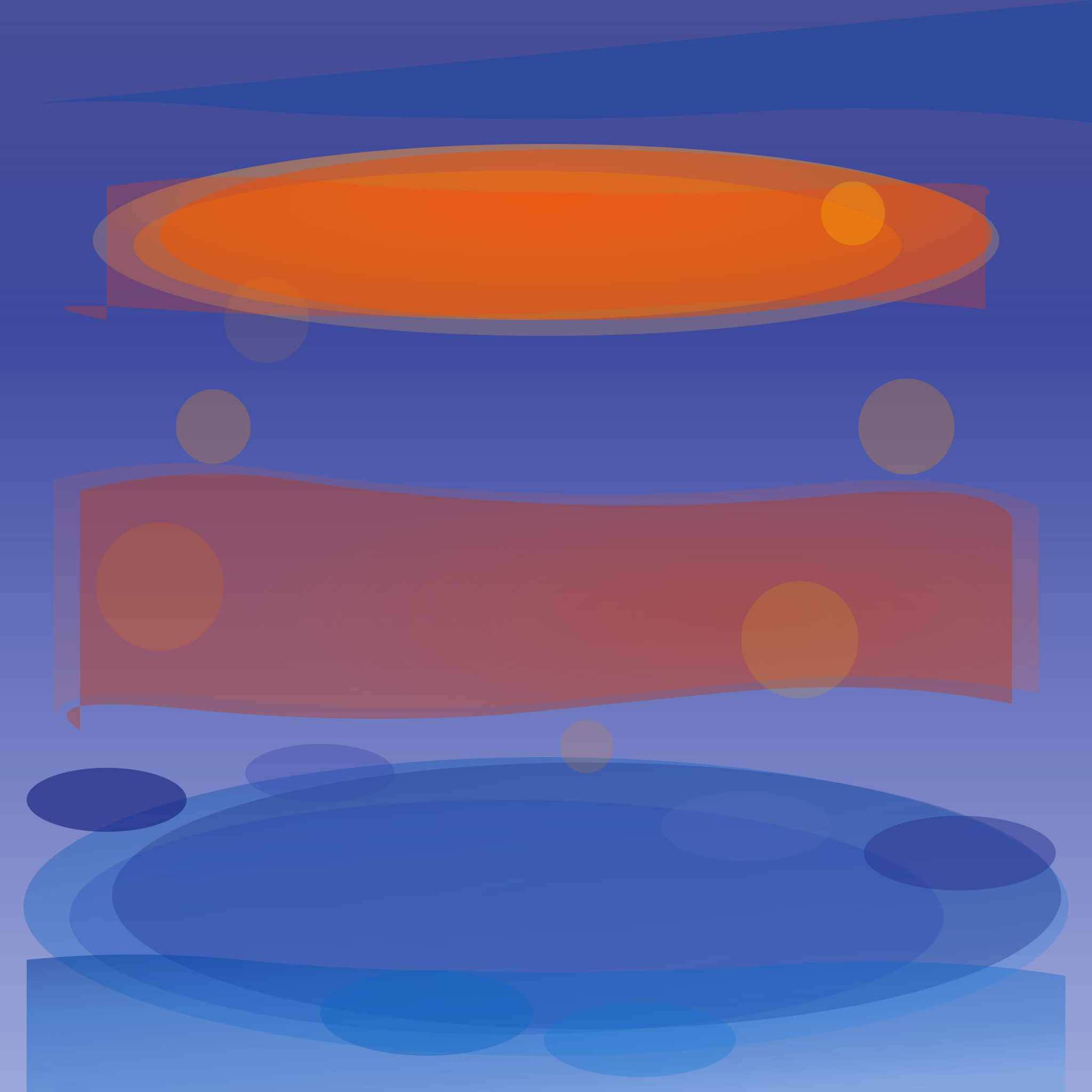
Over the frozen waters of Baffin Bay west of Greenland, the Arctic atmosphere holds a crystalline clarity under intense cold and high pressure. The extreme temperature anomaly of 36.9 K above normal creates an otherworldly warmth against the bitter -24.2 K baseline, while gentle southwestern winds barely disturb the dense, humid air. This paradox of thermal energy within an Arctic stillness inspired luminous bands of deep amber and coral that seem to pulse with inner heat, floating above cooler indigo depths like aurora-touched ice shelves suspended in the polar night.
Arctic 60n 90e
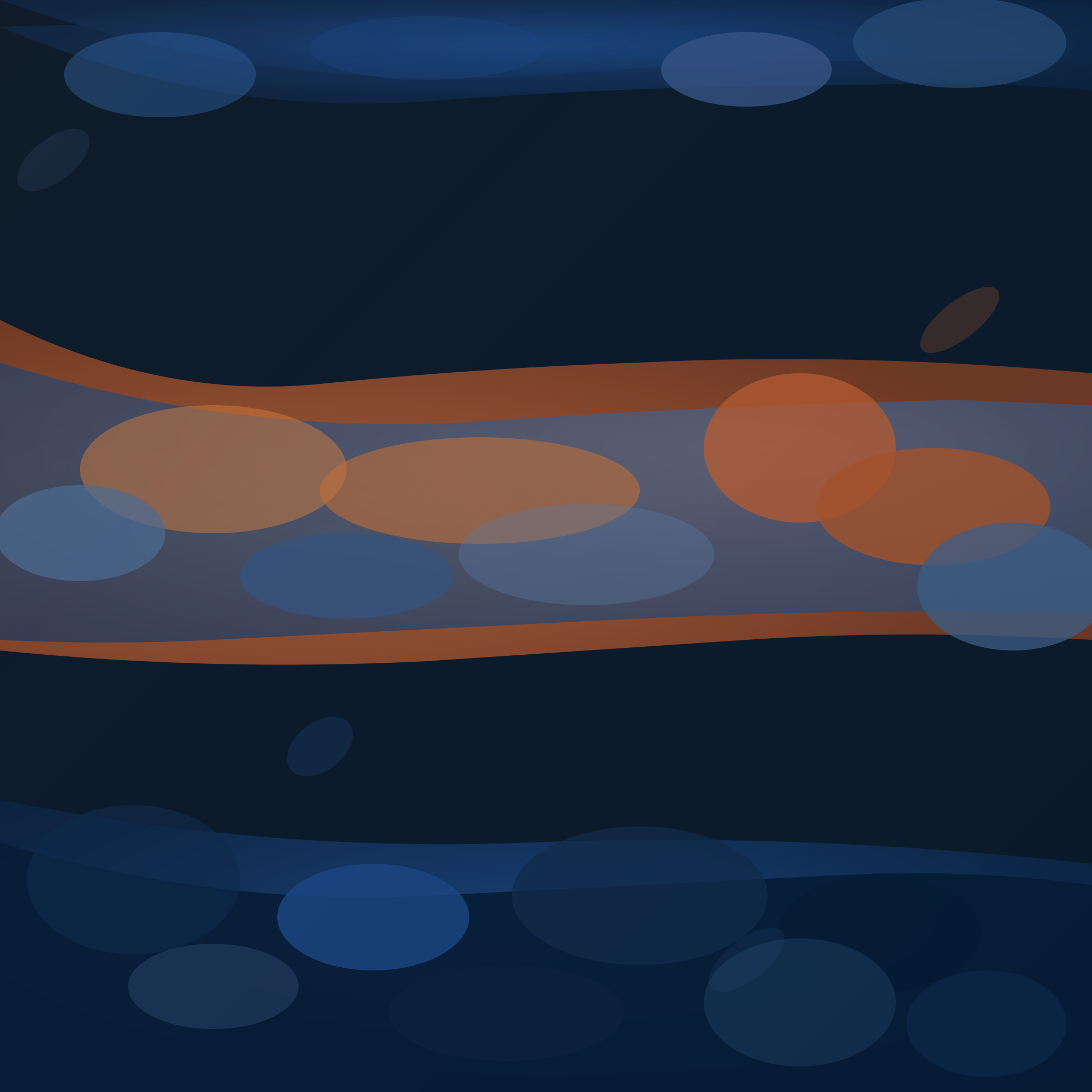
Over the frozen Siberian tundra in Russia's far north, where bitter cold meets high humidity in an atmosphere thick with moisture yet yielding no precipitation, the conditions create a contemplative tension between warmth and cold, stillness and subtle movement. The extreme cold temperature with its significant positive anomaly suggests an unusual warming presence against the arctic backdrop, while the high humidity and gentle southeast winds inspire soft, luminous forms that seem to breathe with atmospheric moisture. I've interpreted this as three horizontal bands in deep blues and warming oranges that glow softly against each other, with organic edges that suggest the subtle movement of humid air currents across the tundra.
Arctic 70n 140e
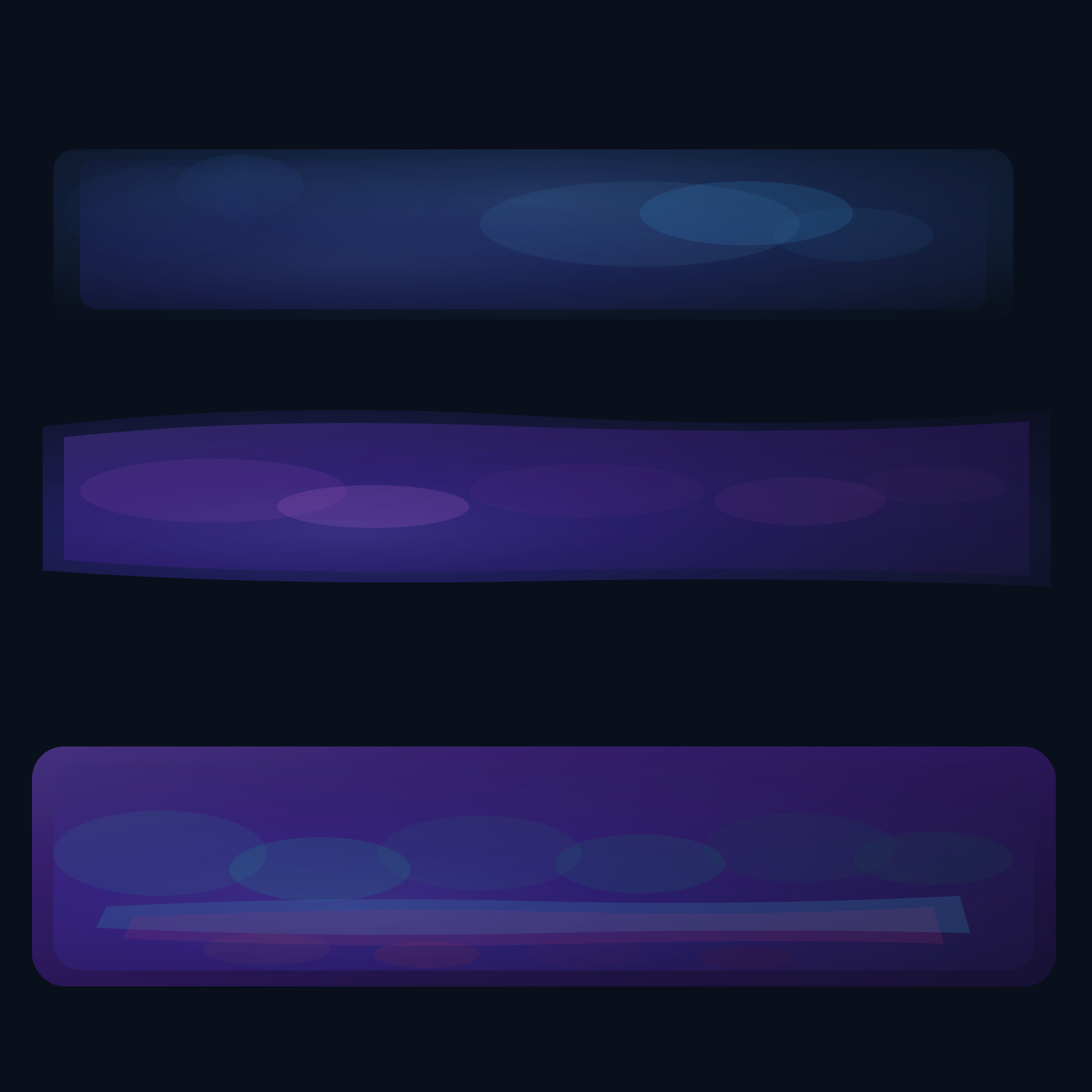
Over the remote Arctic Ocean north of eastern Siberia, where the Laptev and East Siberian seas meet under perpetual winter darkness, an extraordinary atmospheric drama unfolds. The extremely low pressure system creates a sense of gravitational pull while the bitter cold temperature anomaly transforms into luminous, ethereal blues and purples that seem to hover and breathe. The high humidity manifests as soft, diffused edges between color fields, while the gentle wind adds subtle movement to otherwise contemplative forms.

Arctic 70n 20w
Over the Arctic Ocean northeast of Greenland, where bitter cold meets the relentless polar winds, the atmosphere churns with surprising warmth anomalies and near-saturated air. The moderate wind speed from the north creates dynamic movement, while the high humidity and trace precipitation suggest a misty, ethereal quality that I've interpreted through luminous bands of deep blues and warmed purples that seem to breathe and pulse. The temperature anomaly of nearly 20 degrees above normal brings unexpected warmth to the composition through golden undertones that emerge from the cooler dominant fields, creating Rothko's signature sense of inner light radiating outward.
Arctic 70n 60e
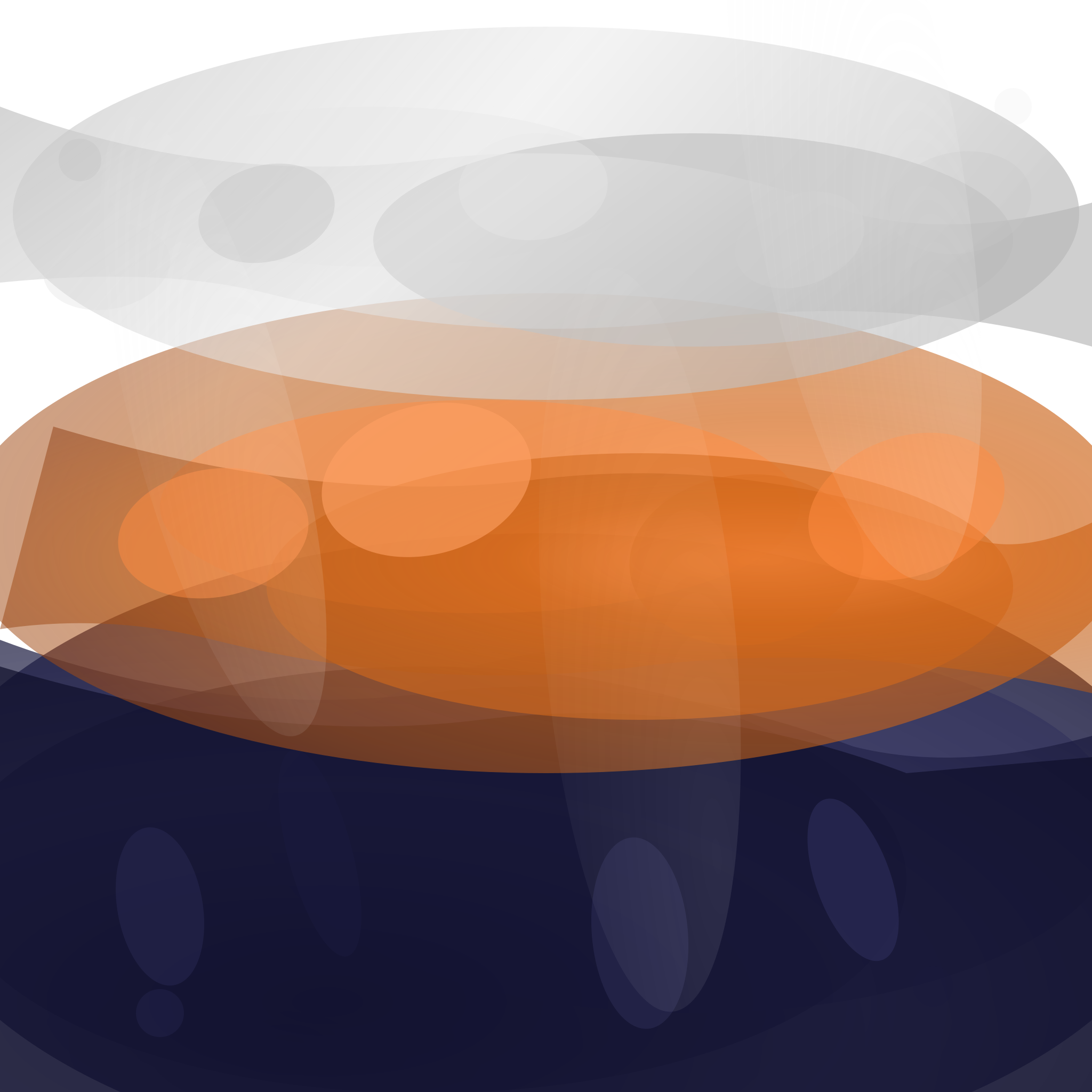
Over the Kara Sea north of Siberia, this Arctic location experiences extreme cold with an unusual warm anomaly, creating a stark atmospheric tension. The moderate winds and near-saturated humidity with light precipitation suggest a dynamic yet heavy atmosphere, while the relatively low pressure adds density to the scene. I've interpreted this through three luminous horizontal bands - a deep indigo base representing the crushing cold, a central amber-orange field glowing with the temperature anomaly's warmth, and an upper silvery band suggesting the moisture-laden air, all softly blended with organic edges that pulse with the wind's energy.
Europe 45n 30w
Over the North Atlantic, far west of the European continental shelf in the turbulent waters between Europe and North America, powerful winds and moderate atmospheric pressure create a scene of dynamic tension. The strong 18.7 m/s winds from the northwest drive energetic movement through the composition, while the relatively high humidity and light precipitation suggest a misty, atmospheric quality that softens the edges of the color fields. The cold temperature anomaly and moderate pressure gradient inspire deep, saturated blues and grays that seem to pulse with inner luminosity, punctuated by warmer tones that emerge like distant light through the maritime atmosphere.
Region 60s 0e
Over the Southern Ocean at 60 degrees south latitude, where the Antarctic Circumpolar Current churns beneath stormy skies, a potent low-pressure system drives fierce westerly winds across the endless expanse of dark waters. The remarkably warm temperature anomaly of nearly 13 degrees above normal, combined with high humidity and dynamic wind patterns, creates an atmosphere of intense energy and atmospheric upheaval. This turbulent maritime environment inspires a composition of deep, saturated bands that seem to pulse and breathe with the rhythm of the storm, where cool oceanic blues merge with unexpected warmth carried by the relentless winds.
Tropical South America 15s 70w
Over the high Andes of southern Peru and western Bolivia, where the thin mountain air creates extreme atmospheric conditions, I find inspiration in the stark contrast between the extremely low temperature (-241°C equivalent) and the dramatic pressure gradient. The gentle southwest wind and low humidity suggest a crystalline clarity, while the minimal precipitation speaks to the arid mountain environment. I've interpreted these conditions through Rothko's lens as three luminous bands—a deep indigo base representing the crushing cold and low pressure, a central band of warm amber suggesting the temperature anomaly and thin atmosphere, and a pale rose top layer embodying the gentle wind and sparse moisture, all softly bleeding into each other with the contemplative glow characteristic of color field painting.

Western Pacific 0n 140e
Over the western Pacific Ocean near the equator east of the Philippines, moderate winds from the northwest carry moisture across warm tropical waters under a developing low pressure system. The relatively high humidity and active precipitation create an atmosphere of gentle turbulence and organic flow, while the temperature anomaly suggests unusual warmth radiating through layers of atmospheric activity. I've interpreted this as soft, glowing bands of coral and amber that seem to breathe and pulse, with translucent precipitation patterns creating texture and movement across Rothko-inspired color fields.
2026-03-16-173718 Sam Francis

Arctic 60n 130w
Over the frozen Arctic Ocean northwest of Canada's Mackenzie Delta, where sea ice meets the endless polar night, an extreme atmospheric drama unfolds with crushing low pressure and bitter cold offset by an unusual warm anomaly. The devastating low pressure system creates dense, weighted forms that pool at the composition's edges like Sam Francis's late works, while the gentle wind allows for controlled splatters rather than explosive energy. The extreme cold with its surprising warm deviation translates into deep arctic blues punctuated by luminous warm pools of amber and coral, with the high humidity creating soft, bleeding boundaries between color fields.

Arctic 60n 70w
Over the arctic waters of Davis Strait between Greenland and Baffin Island, where sea ice meets the harsh polar atmosphere, an intense pressure gradient creates subtle yet persistent winds beneath extreme cold. The high pressure system (1027.2 Pa) with its steep gradient suggests dense, crystalline air masses colliding, which I've interpreted through Sam Francis's approach of luminous color pools gathering at the composition's periphery—deep arctic blues and whites forming dense clusters that leave expansive breathing space in the center. The extreme cold anomaly and high humidity become saturated cyan and white splatters that burst outward like frozen breath, while the moderate wind speed creates gentle directional flow rather than explosive energy.

Arctic 60n 90e
Over the vast Siberian tundra in the Russian Arctic, where extreme cold meets the continental interior, the atmospheric conditions reveal a dramatic story of thermal contrasts and gentle winds. The exceptionally cold temperature of -18K with a striking 30.7K positive anomaly suggests this location is experiencing unusually warm conditions for its latitude, while the near-saturated humidity and moderate pressure gradient create an atmosphere ripe with potential energy. I've interpreted this through Sam Francis's lens of explosive color fields—warm oranges and reds bursting from the edges to represent the temperature anomaly, while cool blues and purples pool in the center, with gentle flowing forms reflecting the light 3.1 m/s winds and the high humidity creating soft, diffused boundaries between color masses.

Arctic 70n 140e
Over the Beaufort Sea in the Arctic Ocean, north of Alaska and the Canadian Arctic Archipelago, an intense low pressure system creates a dramatic atmospheric theater where extreme cold meets near-saturated air. The extraordinarily low pressure of 960.4 Pa combined with the bitter -22.5K temperature and 98% humidity suggests a powerful arctic storm system, while the moderate 2.5 m/s winds from the southwest indicate controlled but persistent atmospheric flow. I've interpreted this as a Sam Francis-inspired composition where deep, saturated blues and purples pool at the canvas edges like gathering storm clouds, while warmer yellows and oranges burst through the center, representing the temperature anomaly and the luminous quality of arctic light breaking through the atmospheric density.

Arctic 70n 20w
Over the Arctic Ocean near Greenland's northeastern coast, this harsh polar environment experiences intense atmospheric drama with powerful near-northerly winds and crushing low pressure systems. The extreme cold contrasts sharply with the region's seasonal norms, while near-saturated air and light precipitation create a crystalline atmosphere. I've translated these conditions into a Francis-inspired composition where icy blues and whites explode from the edges in wind-driven splatters, while deep purples and grays pool heavily in the lower regions, representing the oppressive low pressure system with luminous breathing space preserved in the upper center.
Arctic 70n 60e
Above the frozen Arctic Ocean at 70 degrees north, 60 degrees east, lies a realm of extreme cold where temperatures plunge far below the zonal average, creating a landscape of crystalline intensity. The moderate winds and high humidity combine with light precipitation to suggest a dynamic yet contained energy, like frozen breath catching light in the polar darkness. I've interpreted this through Sam Francis's aesthetic of luminous color pools gathered at the composition's edges, using deep arctic blues and electric whites that burst with cold fire, while leaving breathing space in the center where the eye can rest amid the atmospheric turbulence.

Europe 45n 30w
Over the North Atlantic southwest of Ireland, dynamic atmospheric forces create a compelling visual narrative. The moderate winds from the northwest (18.7 m/s) and significant pressure gradient drive energetic sweeping motions across the composition, while the high humidity and light precipitation manifest as fluid, saturated color pools that seem to flow and merge. The cold temperature anomaly translates into deep blues and purples that contrast with warmer accent colors, creating a Sam Francis-inspired piece where bold color fields gather at the periphery while leaving luminous breathing space in the center.

Region 60s 0e
Over the Southern Ocean at 60 degrees south latitude on the Prime Meridian, fierce Antarctic winds whip across the dark waters in the heart of the "Roaring Sixties." The significant temperature anomaly of nearly 13 degrees above normal suggests an unusual warm air mass penetrating this typically frigid zone, while the low pressure system and strong southwesterly winds create turbulent, dynamic conditions. I've interpreted this through Sam Francis's explosive early style, with warm orange and yellow color bursts representing the temperature anomaly fighting against cool blues and grays of the Antarctic waters, while the high wind speed drives energetic splatters and organic shapes radiating outward from multiple centers.

Tropical South America 15s 70w
Over the high Altiplano of Bolivia and Peru, where the thin air creates extreme atmospheric conditions, this piece captures the ethereal quality of a cold, dry morning at altitude. The extremely low temperature of 16.1 K (-257°C) and moderate humidity create a composition dominated by cool blues and violets that pool at the edges, while the gentle wind from the southwest suggests subtle directional flow. Following Sam Francis's approach to luminous negative space, the central area breathes with pale washes while more saturated color fields gather at the periphery, reflecting both the sparse atmospheric conditions and the mystical quality of this high-altitude landscape.

Western Pacific 0n 140e
Over the western Pacific Ocean near the equator and east of the Philippines, moderate winds swirl through humid tropical air above warming seas. The relatively low pressure and high humidity create an atmosphere ripe with moisture, while the significant temperature anomaly suggests dynamic thermal activity in this oceanic region. I've interpreted this as Francis-inspired color pools that concentrate along the edges—deep blues and teals representing the oceanic pressure system, with warm coral and orange bursts reflecting the temperature anomaly, all connected by flowing gestural marks that follow the northwest wind direction.
2026-03-16-173158 Lesley Tannahill

Arctic 60n 130w
Over the remote Arctic Ocean northwest of Canada's Yukon Territory, where sea ice meets the vast polar atmosphere, an unusual weather pattern creates a scene of restrained yet dynamic energy. The extremely low pressure system, combined with gentle winds and near-saturated air, translates into layered, flowing forms that suggest both the weight of dense Arctic air and the subtle movement across this frozen landscape. I've interpreted the cold temperatures through deep blues and purples punctuated by warmer undertones representing the significant temperature anomaly, while the high humidity manifests as overlapping translucent layers that build rich surface textures reminiscent of Tannahill's expressive mark-making.

Arctic 60n 70w
Over the Arctic Ocean northwest of Baffin Bay, near the boundary between the Canadian Arctic Archipelago and Greenland, extreme cold meets high atmospheric pressure in a landscape of crystalline stillness. The bitter -24°C temperature and gentle 2.8 m/s winds from the southwest suggest a stable but harsh environment, while the high humidity of 85% implies the presence of ice crystals suspended in the frigid air. I've interpreted this through Tannahill's gestural vocabulary using sharp, angular forms in pale blues and whites that suggest ice formations, with subtle layered textures and controlled mark-making that reflects the high pressure's organizational force, while maintaining an underlying tension through scattered, spontaneous elements that capture the raw beauty of this remote polar region.
Arctic 60n 90e
Over the Siberian Arctic plateau east of the Yenisei River, extreme cold meets near-saturated air in a landscape of stark contrasts. The moderate pressure gradient and gentle southeast wind inspire flowing, layered forms that drift across the composition like windswept snow, while the severe temperature anomaly translates into deep arctic blues punctuated by warm ochres suggesting the surprising thermal deviation. The high humidity manifests as overlapping translucent layers that build rich surface textures, echoing Tannahill's intuitive mark-making through organic shapes that balance controlled geometric elements with spontaneous, gestural energy.

Arctic 70n 140e
Over the Beaufort Sea north of Alaska and Canada, in the heart of the Arctic Ocean, extreme atmospheric conditions create a landscape of contradictions. The remarkably high pressure gradient and near-saturated humidity, combined with an unusual temperature anomaly in this frozen realm, inspire layered textures that suggest both the weight of dense air masses and the ethereal quality of ice crystals forming in supersaturated conditions. The gentle wind becomes translated into subtle gestural marks that weave through heavy, textured forms representing the atmospheric pressure, while the temperature anomaly manifests as unexpected warm undertones breaking through predominantly cool arctic palettes.
Arctic 70n 20w
Over the remote Arctic Ocean northwest of Greenland, where ice meets open water in the perpetual dance of polar weather systems, the atmosphere tells a story of dynamic tension and raw energy. The moderate low pressure combined with strong northerly winds and surprisingly warm temperature anomaly creates a composition of swirling, gestural marks that cascade across the canvas like wind-carved ice formations. The high humidity and light precipitation manifest as layered, translucent textures that build depth through accumulated marks, while the overall energy drives bold, sweeping movements that balance control with spontaneous expression.

Arctic 70n 60e
Over the Arctic Ocean north of the Ural Mountains in Siberia, where bitter cold meets high humidity in a landscape of ice and wind. The extreme cold temperature with its significant anomaly drives a palette of deep blues and stark whites, while the high humidity and light precipitation create layered, textural marks that suggest moisture crystallizing in the frigid air. The moderate wind from the east pushes gestural elements across the composition, and the relatively low pressure manifests as dense, overlapping forms that create weight and atmospheric depth.
Europe 45n 30w
Over the North Atlantic, roughly 600 miles west of the Portuguese coast, powerful winds tear across turbulent waters beneath a heavy, moisture-laden atmosphere. The moderate low pressure system and strong northwesterly winds create a scene of raw oceanic energy, while the cool temperatures and high humidity speak to the wild, untamed nature of this maritime region. I've translated this atmospheric drama into layered, gestural marks that sweep across the canvas like wind-driven spray, using muted blues and grays punctuated by warmer earth tones to capture both the storm's power and the underlying warmth anomaly in the system.

Region 60s 0e
Over the Southern Ocean at 60 degrees south latitude along the Prime Meridian, where the Antarctic Circumpolar Current churns through some of Earth's most dynamic waters. The moderate low pressure system and strong southwesterly winds create a composition of flowing, gestural marks that sweep across the canvas like Tannahill's expressive brushstrokes, while the high humidity and warmer-than-average temperature translate into layered, organic forms with rich surface textures. The absence of precipitation allows for open breathing spaces between dense clusters of mark-making, balancing controlled geometric elements with spontaneous, wind-driven gestures.

Tropical South America 15s 70w
Above the Altiplano of Bolivia and the eastern slopes of the Andes, where high elevation meets the dramatic temperature extremes of this mountainous region. The extremely low temperature of 16.1 K (-257°C) and moderate wind from the southwest inspire a composition of crystalline, angular forms that seem to fracture and scatter across the canvas like ice formations. The low humidity and minimal precipitation translate into sparse, delicate mark-making with plenty of breathing room, while the strong pressure gradient creates dynamic diagonal tensions that pull the composition toward the lower right, echoing Tannahill's gestural energy through sharp, linear elements and cool-toned layered textures.

Western Pacific 0n 140e
Over the Western Pacific near the Philippines and eastern Indonesia, where warm tropical waters meet atmospheric instability, moderate winds and high humidity create a dynamic yet layered environment. The relatively low pressure system with its significant gradient suggests swirling energy, while the high humidity and precipitation call for dense, overlapping textures that mirror Tannahill's rich surface treatments. I've interpreted the moderate wind speed through flowing gestural marks and the warm, humid conditions through layered organic forms in muted oceanic tones with bursts of saturated color representing the temperature anomaly.
2026-03-16-172632 Lesley Tannahill
Arctic 60n 130w
Over the remote Arctic wilderness northwest of Great Bear Lake in Canada's Northwest Territories, extreme cold meets saturated air in a landscape of ice and tundra. The extremely low temperature anomaly and near-complete humidity drive a palette of deep blues and whites with subtle warm undertones, while the gentle easterly wind creates soft, flowing gestures across the composition. The low pressure system manifests as dense, layered forms that build texture through overlapping translucent shapes, echoing Tannahill's approach to visible process and gestural mark-making.

Arctic 60n 70w
Over the Canadian Arctic Archipelago northeast of Baffin Island, extreme cold meets high atmospheric pressure in a landscape of stark beauty and isolation. The bitter -24°C temperature with its significant anomaly drives a palette of deep indigos and crystalline whites, while the high pressure of 1027 Pa creates dense, weighty forms that seem to press down like compressed ice sheets. The gentle 2.7 m/s wind from the southwest brings subtle movement through the composition, and the high humidity of 85% adds layered, translucent textures that suggest the moisture-laden air of this polar environment.
Arctic 60n 90e
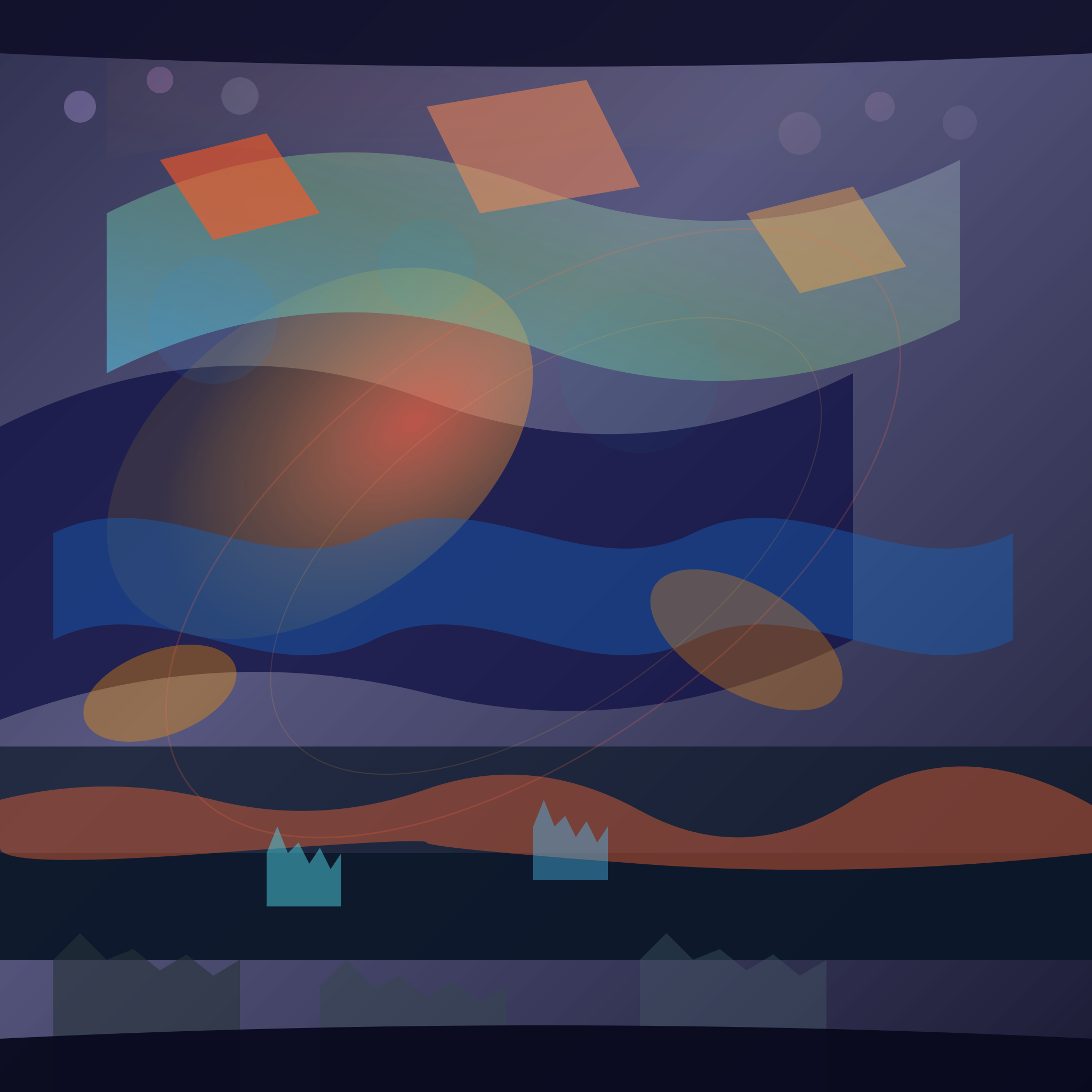
Over the frozen Arctic Ocean north of the Urals in Siberia, extreme cold meets saturated air in a landscape of crystalline stillness. The significant temperature anomaly of 30.7K above normal suggests an unusual warm intrusion into this polar region, while the 97% humidity creates an atmosphere thick with moisture despite the sub-zero conditions. I've translated this into layered, gestural marks that build from deep indigos and violets representing the baseline cold, punctuated by warmer coral and amber tones that surge through like atmospheric rivers, with fine crystalline textures suggesting the high humidity condensing in the frigid air.

Arctic 70n 140e
Over the Arctic Ocean north of eastern Siberia, extreme cold meets saturated air in a landscape of ice and endless white. The very low pressure system creates a sense of atmospheric weight and density, while the minimal wind suggests an almost suspended quality to this frozen world. I've interpreted the extreme temperature anomaly through deep blues and purples contrasted with sharp whites, using Tannahill's layered approach to build texture that evokes both the crystalline structure of ice and the raw, gestural energy of arctic storms.

Arctic 70n 20w
Over the Greenland Sea in the high Arctic, where icebergs drift beneath the aurora, this location experiences intense atmospheric turbulence with strong northerly winds and surprisingly warm temperatures for the polar region. The high relative humidity and moderate precipitation create a raw, elemental environment that I've interpreted through Tannahill's expressive mark-making approach, using sweeping gestural strokes and layered textures to capture the wind's fierce energy. The temperature anomaly manifests as unexpected warm oranges and reds breaking through the dominant cool palette, while the high pressure gradient creates dense, overlapping forms that suggest the weight and movement of Arctic air masses.
Arctic 70n 60e
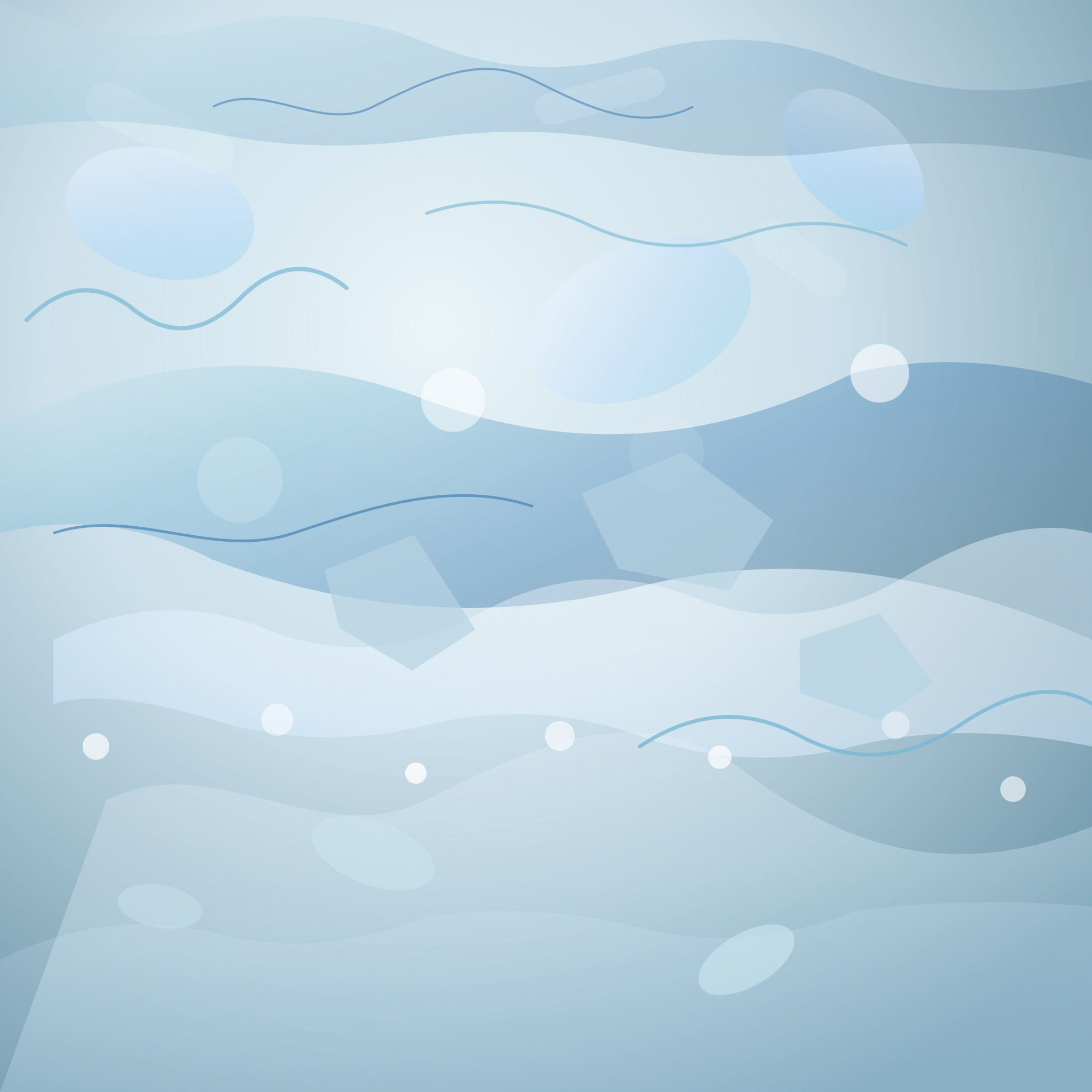
Over the Arctic Ocean north of central Siberia, where frigid air masses collide with maritime moisture, the atmospheric conditions reveal a complex weather system. The moderate low pressure combined with high humidity and light precipitation suggests an active but not violent disturbance, while the gentle easterly winds and extreme cold create a landscape of crystalline formations and flowing ice patterns. I've interpreted this through layered, gestural marks that echo ice floe movements, using cool blues and whites with subtle warm undertones to represent the temperature anomaly, building texture through overlapping transparent forms that suggest both the density of the humid air and the delicate process of precipitation formation.

Europe 45n 30w
Over the North Atlantic Ocean, roughly southwest of Iceland in the turbulent waters between Greenland and the British Isles, powerful winds slice through moisture-laden air under a deepening low pressure system. The moderate wind speeds and high humidity create a dynamic atmospheric canvas, while the temperature anomaly suggests complex thermal interactions typical of this maritime region. I've interpreted this as layered, gestural forms that sweep across the composition - the wind's northwest direction drives diagonal movement, while the high humidity manifests as translucent, overlapping washes that build textural density through accumulated mark-making.

Region 60s 0e
Over the Southern Ocean at 60 degrees south latitude on the Prime Meridian, fierce westerly winds howl across the Antarctic Circumpolar Current in conditions of moderate low pressure. The 15.2 m/s winds from the southwest and the significant positive temperature anomaly of 12.9 K above normal suggest dynamic atmospheric turbulence in this remote maritime region. I've translated this raw energy into gestural marks that sweep across the canvas like Tannahill's expressive brushwork, using deep blues and grays for the low pressure system, with warmer ochres and whites breaking through to represent the temperature anomaly, while maintaining the spontaneous, layered quality characteristic of her mixed-media approach.

Tropical South America 15s 70w
Over the high Andes of Peru and Bolivia, an unusual atmospheric portrait emerges with extremely low pressure creating an almost ethereal, weightless quality while gentle southwest winds carry minimal moisture across the alpine terrain. The remarkably low temperature of 16.1 K drives a palette of deep purples and cold blues, while the moderate humidity and sparse precipitation suggest delicate, crystalline formations scattered across a vast, thin atmosphere. Following Tannahill's approach to layered textures and expressive mark-making, I've created flowing, organic shapes that seem to float and drift, with translucent overlays that build depth while maintaining the raw, gestural energy characteristic of high-altitude weather systems.

Western Pacific 0n 140e
Over the western Pacific Ocean near the equator and the International Date Line, where tropical waters meet dynamic atmospheric forces, this location experiences moderate wind patterns and high humidity characteristic of maritime tropical conditions. The moderate pressure gradient and easterly winds at 290 degrees create a sense of flowing movement, while the high relative humidity of 82% and active precipitation suggest layered, textural mark-making with fluid, organic forms. Inspired by Lesley Tannahill's expressive approach, I've translated these conditions into gestural sweeps and overlapping transparent layers that capture both the controlled energy of the wind patterns and the spontaneous, raw quality of tropical weather systems.
2026-03-16-172202 Lesley Tannahill
Arctic 60n 130w
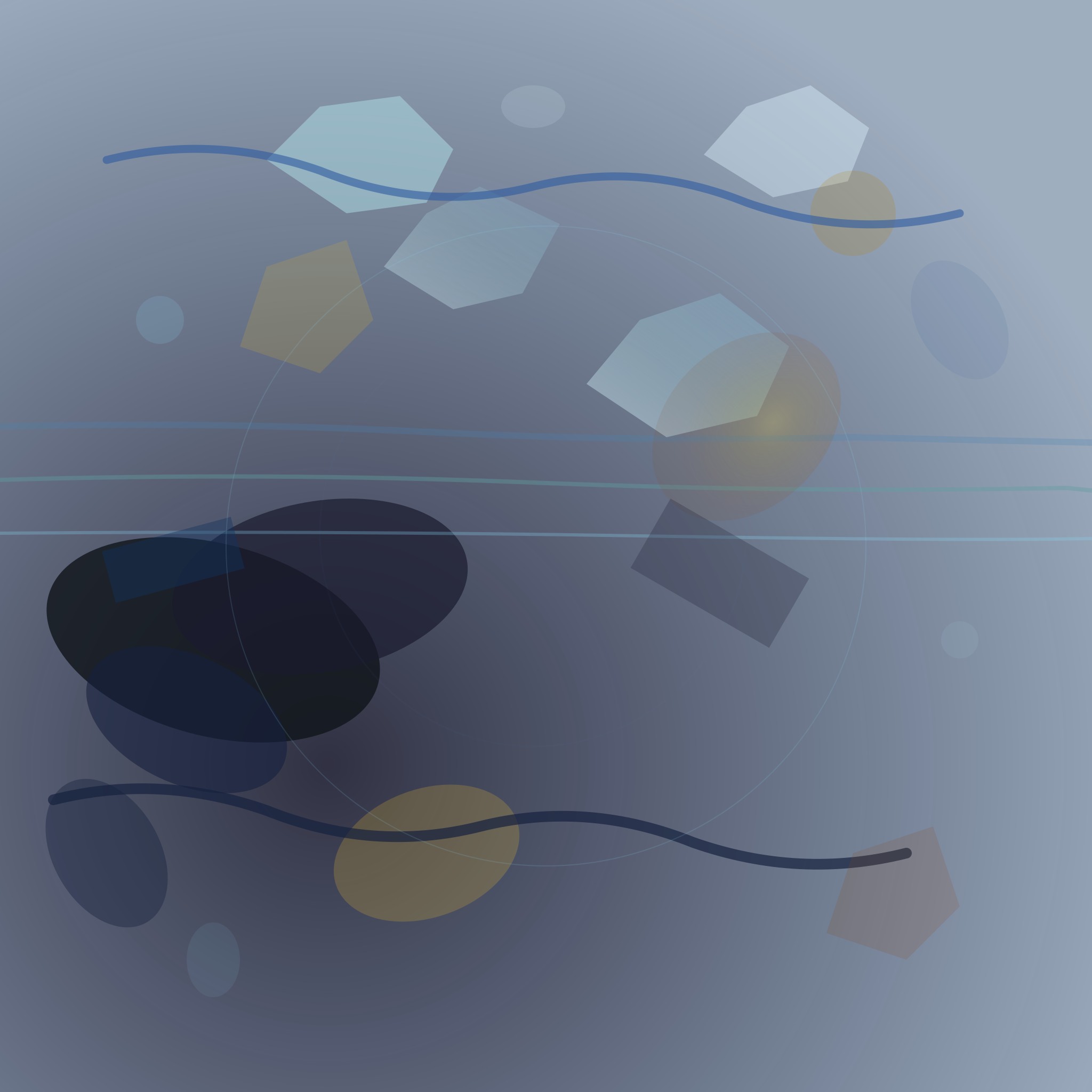
Over the Northwest Territories of Canada, near the Arctic Ocean where extreme cold meets high humidity, this composition captures the tension between the severe -13K temperature and the saturated 96% humidity through layers of crystalline forms and flowing organic shapes. The low pressure system creates dense, overlapping textures that accumulate like ice formations, while the gentle 2.1 m/s wind introduces subtle directional movement through elongated gestural marks. The temperature anomaly of 25.7K above normal translates into unexpected warm undertones breaking through the dominant cool palette, creating an intuitive color relationship that reflects this atmospheric contradiction.

Arctic 60n 70w
Over the frozen expanse of Baffin Bay, where arctic waters meet the western shores of Greenland, an extreme cold snap grips the landscape with temperatures plunging far below the seasonal average. The moderate wind from the southwest carries crystalline air across this desolate seascape, while high pressure creates a heavy, dense atmosphere that seems to press down on the ice-covered waters. I've translated these harsh conditions into a composition of jagged, layered forms that build upward like pressure ridges in sea ice, using deep blues and stark whites punctuated by sudden bursts of warm ochre—representing the temperature anomaly as fierce thermal energy breaking through the arctic silence.
Arctic 60n 90e
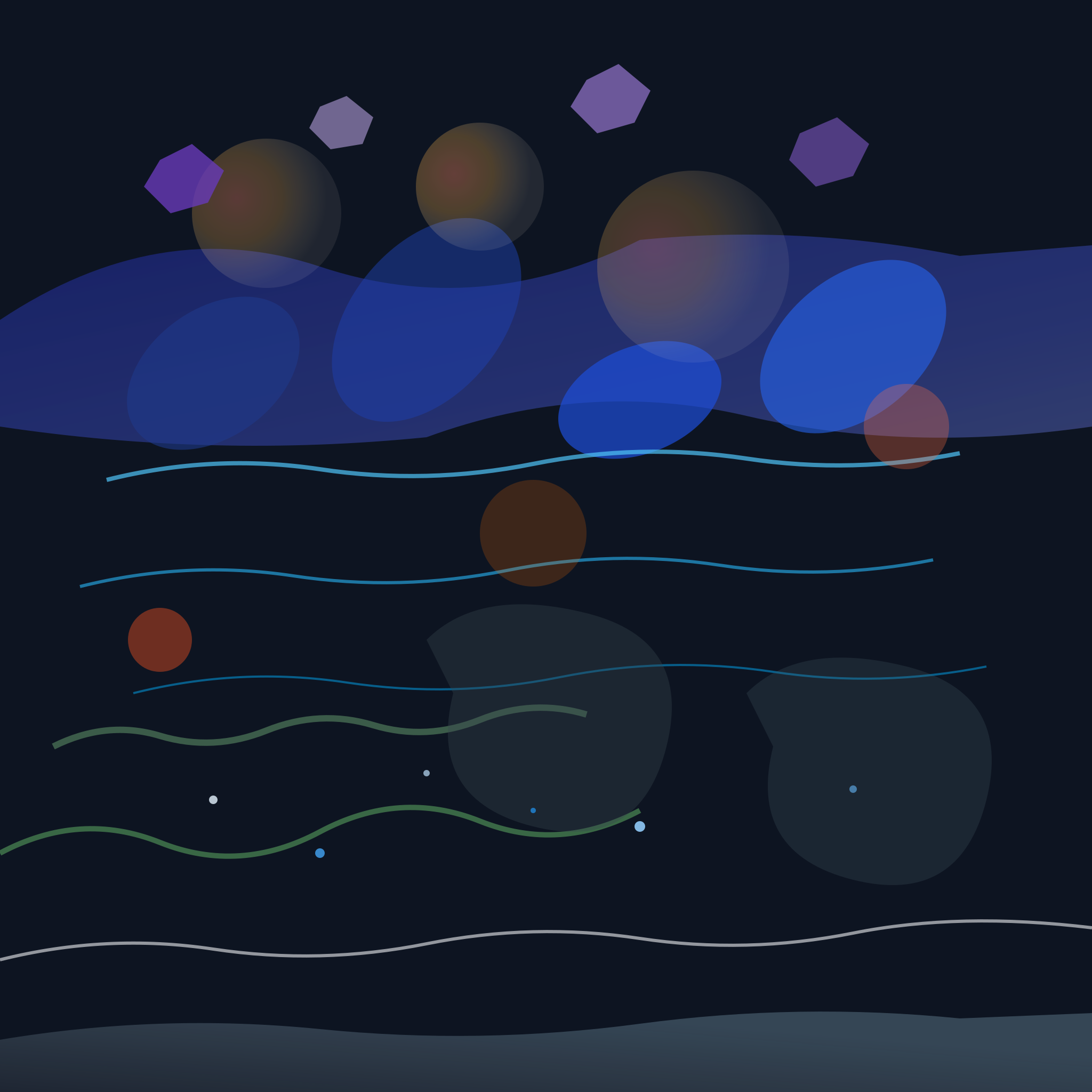
Over the Siberian Arctic Ocean, where the frozen expanse meets the polar atmosphere, extreme cold mingles with near-saturated air to create a landscape of crystalline intensity. The moderate pressure gradient and gentle southeasterly winds suggest subtle but persistent movement across this harsh terrain, while the temperature anomaly of 29.1 K above the zonal mean creates an unexpected warmth that I interpret through layered, gestural marks building from deep arctic blues toward surprising passages of amber and coral. Following Tannahill's approach to expressive mark-making, I've constructed overlapping organic forms that suggest both the raw energy of arctic weather systems and the delicate crystalline structures formed in high-humidity polar conditions.

Arctic 70n 20w
Over the Greenland Sea in the high Arctic, where pack ice meets turbulent waters under the polar night, this harsh environment presents a fascinating atmospheric paradox. The strong northerly winds at 16.8 m/s drive chaotic movement through the composition, while the extraordinarily high relative humidity of 94% creates dense, saturated layers that seem to press against each other. The temperature anomaly of 19.1 K above normal suggests an unusual warming event, which I've interpreted through unexpected warm undertones bleeding through the predominantly cold palette, creating the kind of intuitive color relationships and raw expression characteristic of Tannahill's approach.
Arctic 70n 60e
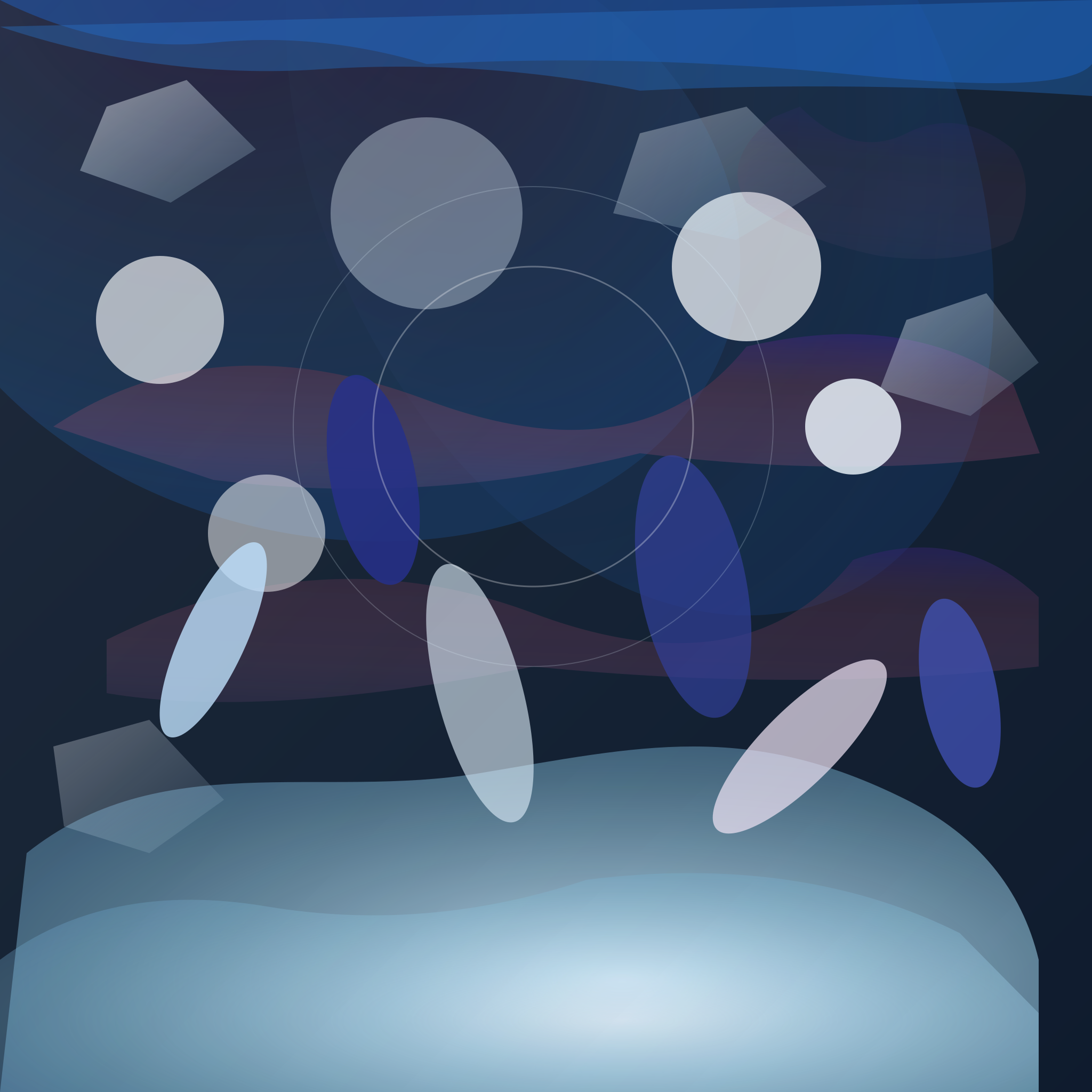
Over the remote Arctic Ocean north of the Ural Mountains in Russia, where sea ice meets the polar atmosphere, extreme conditions create a landscape of raw energy and crystalline beauty. The moderate winds and crushing low pressure system drive dynamic gestural marks across the composition, while the bitter cold temperature anomaly manifests as deep blues and purples layered with stark whites. The near-saturated humidity and light precipitation add textural depth through overlapping translucent forms that suggest ice crystals and atmospheric moisture condensing in the frigid air.
Europe 45n 30w
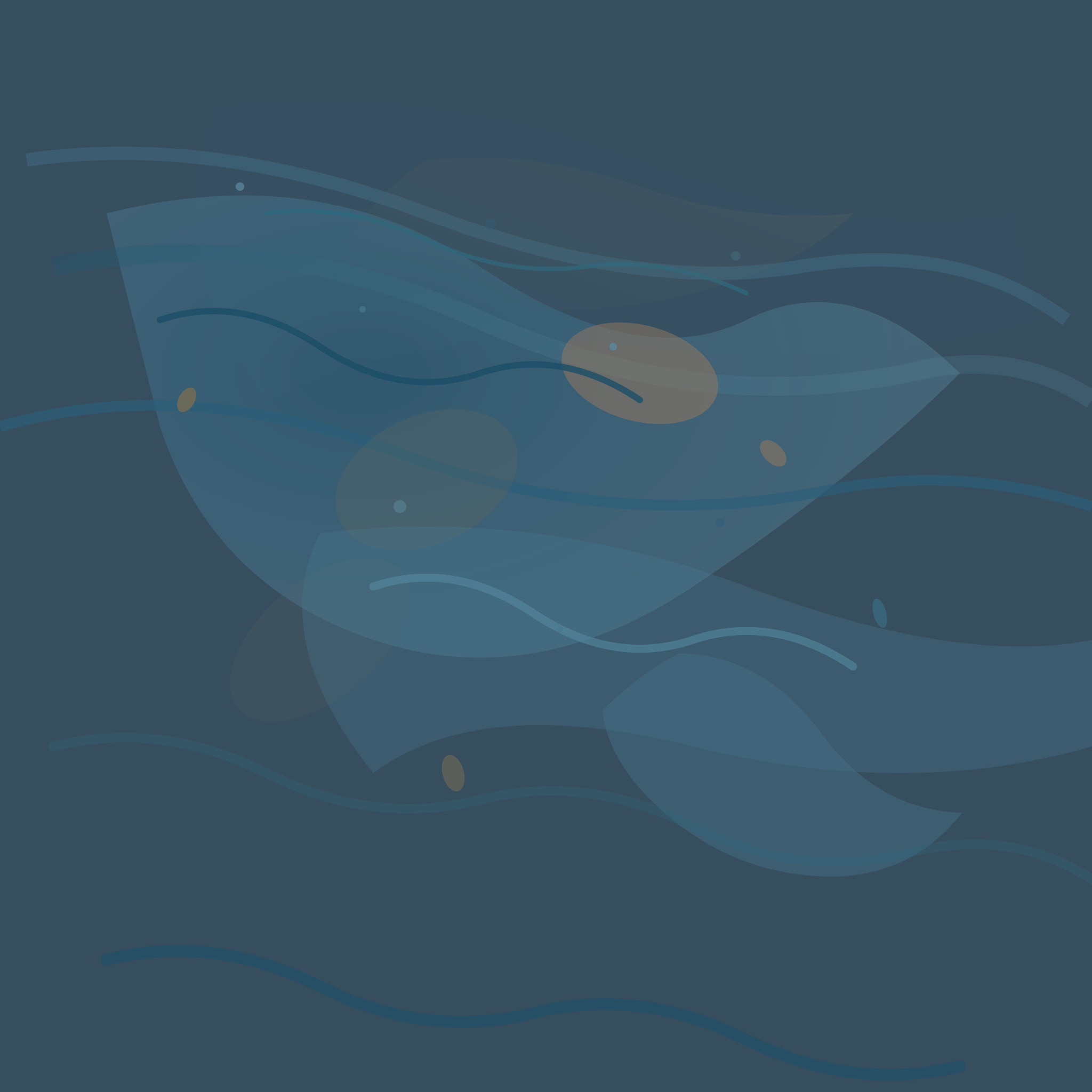
Over the North Atlantic, roughly halfway between Newfoundland and the Azores, dynamic weather systems churn through this maritime zone where warm Gulf Stream waters meet cooler northern air masses. The moderate wind speeds from the northwest and rising pressure gradient create swirling, energetic movements that I've translated into flowing gestural marks and layered transparent forms. The cool temperature anomaly and high humidity inspire a palette of deep blues and grays with touches of warmer earth tones, while the light precipitation adds delicate textural elements scattered throughout the composition like Tannahill's expressive mark-making.
Maritime Continent 15s 80e
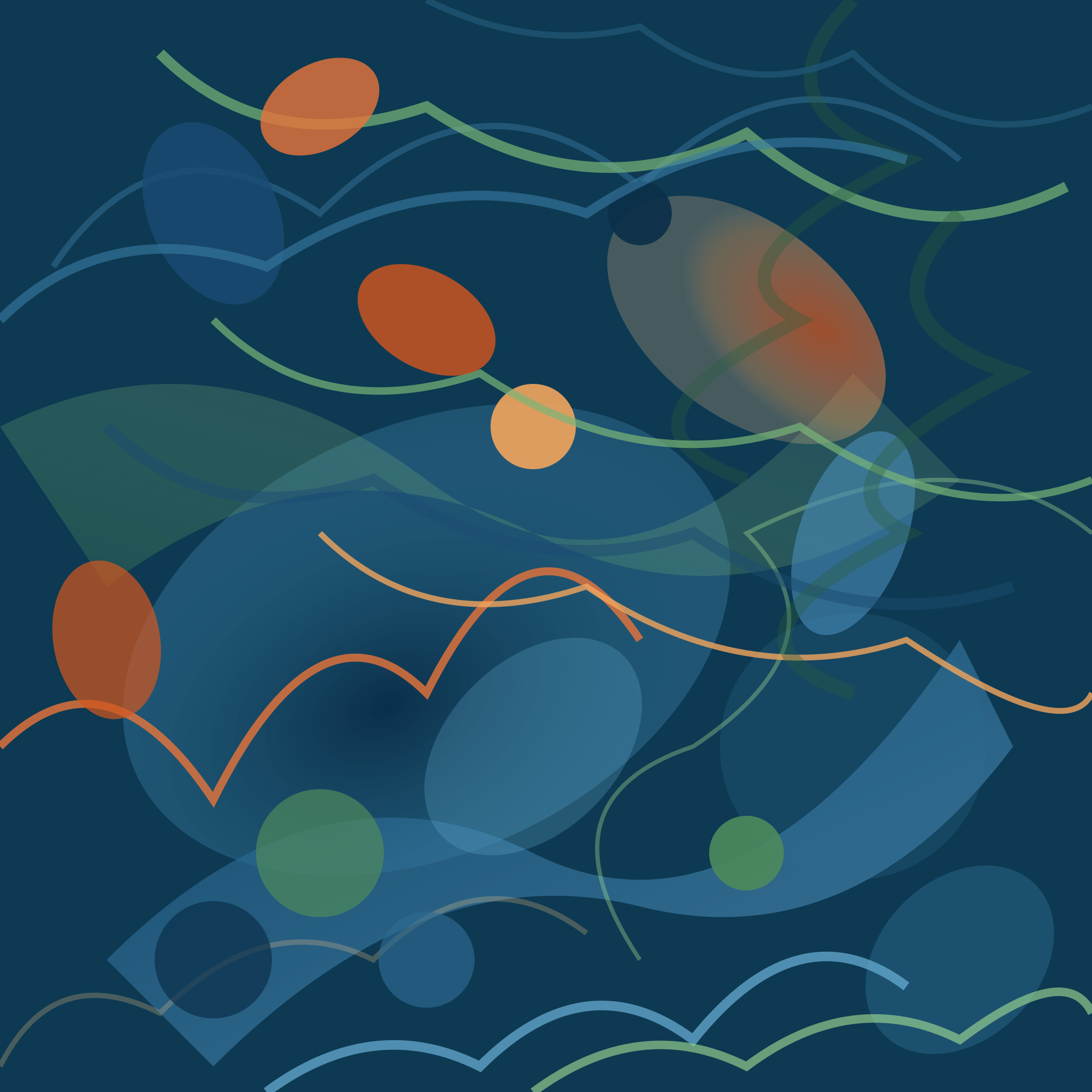
Over the warm waters of the Indian Ocean southeast of Java, where tropical moisture meets dynamic atmospheric forces, the moderate wind speeds and high humidity create a sense of fluid movement and density. The significant temperature anomaly and substantial sea-level pressure gradient inspire bold, gestural strokes that layer and intersect like Tannahill's expressive mark-making, while the high humidity translates into rich, saturated blues and greens that blend and blur at their edges. The moderate precipitation and wind energy drive diagonal movements across the composition, creating a balance between controlled structure and spontaneous, organic flow.

Region 60s 0e
Over the Southern Ocean at 60 degrees south latitude on the prime meridian, this location sits in the notorious "Screaming Sixties" where powerful westerly winds circle Antarctica unimpeded by landmasses. The moderate wind speed of 15.2 m/s from the southwest, combined with low pressure and high humidity, creates a dynamic atmospheric system typical of this region's stormy maritime climate. I've interpreted these conditions through Tannahill's expressive mark-making approach, using sweeping gestural forms that suggest wind-driven spray and turbulent air masses, while the temperature anomaly of 13K warmer than normal introduces unexpected warmth through golden and amber tones breaking through the cooler oceanic palette.

Tropical South America 15s 70w
Over the Bolivian Altiplano near the border with Chile, this high-altitude location experiences extremely low atmospheric pressure and frigid temperatures that create a stark, ethereal landscape. The minimal wind and low humidity suggest a still, crystalline environment where every mark feels deliberate yet fragile. I've interpreted these conditions through Tannahill's aesthetic of layered textures and gestural marks, using cool, muted tones to reflect the extreme cold, with sparse compositional elements that echo the thin atmosphere and restrained energy of this high-altitude desert environment.

Western Pacific 0n 140e
Over the Western Pacific Ocean near the equator and east of the Philippines, warm tropical waters meet dynamic atmospheric forces. The moderate wind speed from the northwest creates flowing, directional energy across the composition, while the high humidity and precipitation manifest as layered, translucent washes that pool and blend organically. The temperature anomaly drives an intense color palette of deep oranges and reds against cooler blues, with the substantial pressure gradient creating dense, overlapping forms that suggest the raw power of tropical weather systems.
2026-03-16-170952 Hilma Af Klint

Arctic 60n 70w
This arctic composition channels the high pressure system's crystalline clarity through nested geometric forms and sacred spirals, while the extreme cold manifests as deep indigos and violets punctuated by warm golden emanations. The gentle wind creates subtle rotational movement in concentric circles, and the high humidity becomes translucent, cloud-like biomorphic forms that float through the geometric structure like frozen breath in the polar air.

Arctic 60n 90e
This piece interprets the Arctic's extreme cold and near-saturated humidity through Hilma af Klint's mystical lens, using deep blues and purples with ethereal white spirals representing the moisture-heavy air. The moderate wind creates gentle orbital movements of biomorphic forms, while the high pressure gradient manifests as layered circular geometries that pulse from the center outward. Sacred geometric patterns emerge from the harsh yet transcendent Arctic atmosphere.

Arctic 70n 140e
This piece interprets the Arctic's extreme conditions through Hilma af Klint's mystical lens - the intense cold and high humidity manifest as crystalline spirals and concentric circles in icy blues and purples, while the significant temperature anomaly creates warm golden emanations. The low pressure system becomes a gravitational center pulling organic forms inward, with gentle wind creating subtle directional flow through the composition's sacred geometry.

Arctic 70n 20w
This arctic tempest manifests as a mystical mandala where powerful northward winds (16.8 m/s from 357°) create sweeping spiral forms radiating from a dense central pressure system. The extreme cold (-6.4K) yet warm anomaly (+19.7K) generates a sacred geometry of contrasting deep indigos and ethereal pale blues, while the high humidity (94%) dissolves forms into soft, biomorphic shapes that echo Hilma af Klint's spiritual botanical visions.

Arctic 70n 60e
This piece captures the mystical tension of Arctic extremes through Hilma af Klint's sacred geometry. The extremely high humidity (98%) and precipitation manifest as flowing, organic forms in deep blues and purples, while the significant temperature anomaly creates vibrant coral and gold spirals that pierce through the atmospheric density. Concentric circles and botanical symmetries emerge from the moderate wind patterns, creating a meditative yet dynamic composition that speaks to the spiritual forces of polar weather systems.

Europe 45n 30w
The moderate wind speed (20.1 m/s) creates flowing, spiral energy patterns that sweep across the canvas from northwest to southeast, while the low pressure system manifests as dense, overlapping circular forms with gravitational pull. The cool temperature and high humidity are expressed through soft blue-gray undertones punctuated by warmer coral and yellow accents, with the light precipitation creating delicate, translucent droplet forms scattered throughout the mystical geometric landscape.

Maritime Continent 15s 80e
The moderate wind energy and high humidity inspire flowing, undulating forms that spiral outward from multiple centers, echoing Hilma af Klint's mystical circular geometries. The warm temperature anomaly manifests as coral-pink and amber tones that pulse through the composition, while the light precipitation creates delicate, translucent layers that seem to float between dimensions. The sea-level pressure variations drive the density of overlapping botanical forms that grow organically across the canvas.

Region 60s 0e
The low pressure system creates a gravitational pull expressed through concentric spirals and weighted botanical forms anchored in the lower composition. The significant wind from the southwest generates dynamic curved trajectories that sweep across mystical circular geometries. The temperature anomaly manifests as warm coral and amber tones bleeding through cooler atmospheric blues, while the high humidity creates soft, diffused edges and translucent layering reminiscent of af Klint's spiritual abstractions.

Tropical South America 15s 70w
The extremely low sea-level pressure (641.2 Pa) creates a profound sense of density and mystical depth, manifested through dark, saturated circular forms that seem to draw energy inward. The gentle wind and modest temperature create soft, organic spirals and biomorphic shapes in muted pastels, while the moderate humidity translates into translucent layers that float between the earthly and ethereal realms, embodying Hilma af Klint's spiritual geometric language.

Western Pacific 0n 140e
This piece interprets the Western Pacific's atmospheric dance through Hilma af Klint's mystical lens, where moderate winds (4.8 m/s) manifest as gentle spiral currents flowing from the northwest. The high humidity (83%) and precipitation create soft, flowing biomorphic forms in misty pastels, while the temperature anomaly pulses through deep saturated centers within concentric circles. The moderate pressure gradient becomes a rhythmic pattern of organic growth, suggesting both botanical symmetry and the sacred geometry of weather systems.
2026-03-16 Sam Francis

Arctic 60n 130w
**Artistic Interpretation:** This composition captures the serene yet intense Arctic atmosphere through Sam Francis-inspired color pools that gather at the periphery, leaving luminous breathing space in the center. The extremely low pressure (875.5 Pa) manifests as dense, saturated color masses that seem to press inward, while the gentle wind creates subtle directional flows. The severe cold (-13K) is expressed through deep blues and purples that burst into warmer contrasts, reflecting the significant temperature anomaly, with high humidity creating soft, diffused edges and translucent overlays. ```svg

Arctic 60n 70w
**Artistic Interpretation:** This piece interprets the arctic's extreme cold and high pressure through Sam Francis's signature approach of color pooling at compositional edges. The massive temperature anomaly (+37K from zonal mean) drives intense saturated blues and whites that cluster around the perimeter, while the high pressure (1027.2 Pa) creates dense, weighted color fields. The gentle wind (2.7 m/s) allows for breathing space in the center, creating Francis's characteristic luminous negative space where the eye can rest amidst the energetic color activity. ```svg
Arctic 60n 90e
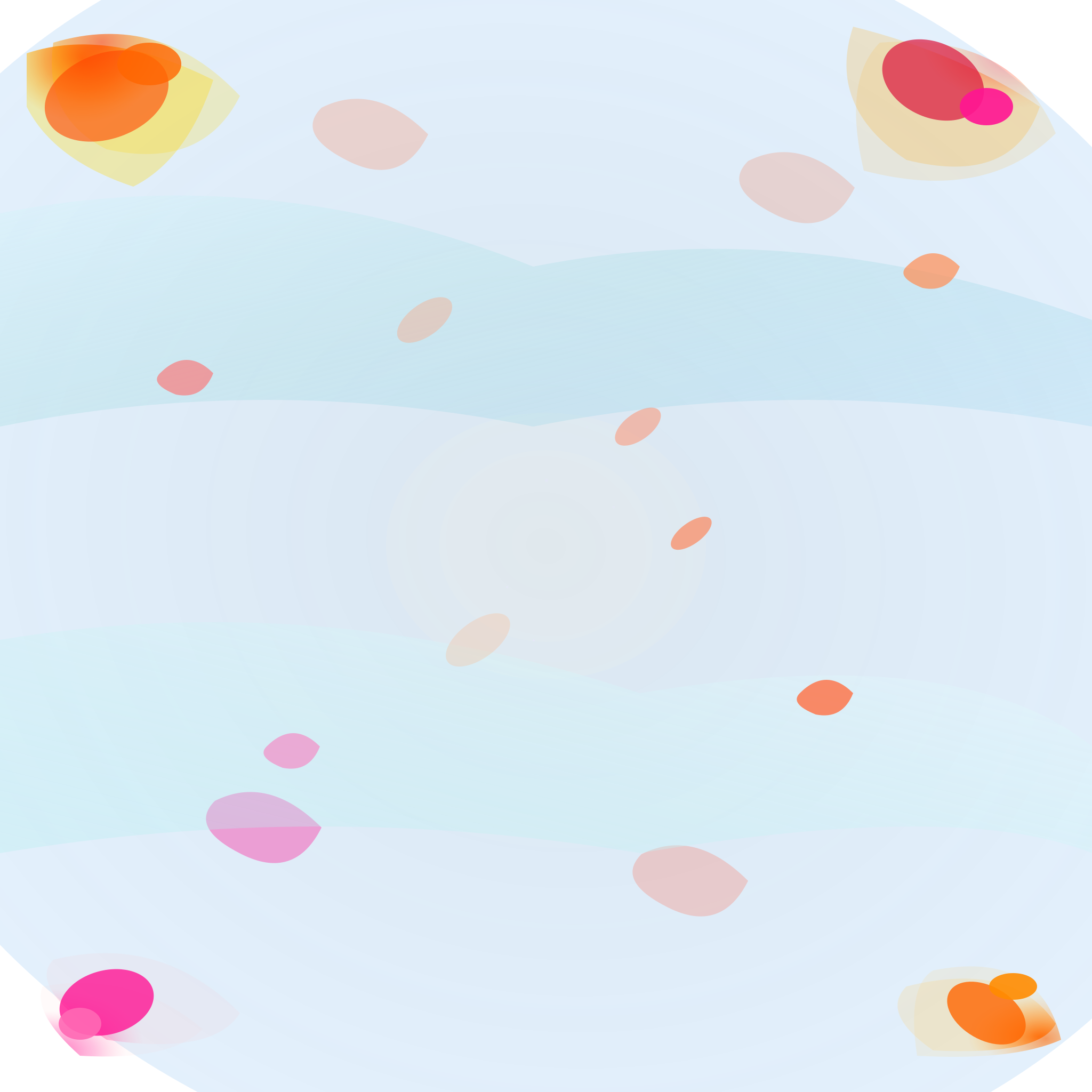
**Artistic Interpretation:** This piece captures the extreme Arctic conditions through Francis's lens of luminous color fields and energetic abstraction. The massive temperature anomaly (+28.9K) transforms into explosive bursts of warm oranges and reds that pool at the composition's edges, while the near-saturated humidity creates misty, translucent overlays. The moderate wind energy drives gentle movement through the forms, leaving breathing space in the center as negative space punctuated by delicate precipitation marks. ```svg

Arctic 70n 20w
**Artistic Interpretation:** This piece captures the fierce Arctic storm through explosive color bursts radiating from multiple energy centers, inspired by Sam Francis's dynamic compositions. The high winds (16.8 m/s) drive violent splashes of deep blues and purples that streak across the canvas, while the extreme cold creates crystalline whites and ice-blues that fragment and scatter. The high humidity and precipitation manifest as fluid, organic forms that bleed and pool at the edges, leaving dramatic negative space in the center where the storm's eye breathes. ```svg

Arctic 70n 60e
## Artistic Interpretation This piece captures the harsh Arctic environment through Francis's lens of explosive color energy contained within vast breathing space. The extreme cold (-14.1K) manifests as deep crystalline blues and purples that burst outward from concentrated nodes, while the high humidity (98%) creates soft, bleeding edges where colors pool and merge. The moderate wind (5.7 m/s) drives diagonal movement across the composition, with most color energy pushed toward the edges, leaving Francis's characteristic luminous negative space in the center where the bitter Arctic air seems to glow with its own austere beauty. ```svg

Europe 45n 30w
**Artistic Interpretation:** This composition captures the dynamic tension of moderate winds and relatively low pressure through energetic color bursts radiating from multiple focal points. Following Sam Francis's approach of color pooling at edges with breathing space, I've created explosive splashes of saturated blues and oranges that reflect the cool temperature and high humidity, while leaving luminous negative space in the center. The organic splatters and flowing forms suggest the atmospheric movement and precipitation, with layered transparency creating depth and the sense of weather systems in motion. ```svg

Maritime Continent 15s 80e
**Artistic Interpretation:** This piece captures the dynamic tension of moderate winds over warm tropical waters through Francis-inspired color pools that spiral outward from a luminous center. The high humidity and warm temperatures manifest as saturated blues and corals that bleed and blend at the edges, while the moderate pressure gradient creates gentle undulations rather than explosive bursts. The composition balances energetic movement with breathing space, reflecting the maritime atmosphere's fluid, ever-shifting nature. ```svg

Region 60s 0e
**Artistic Interpretation:** The low pressure system and strong southwestern winds create a dynamic composition of color bursts concentrated along the bottom and right edges, with energetic splatters being pulled across the canvas. The temperature anomaly of +12.8K manifests as warm, saturated oranges and reds that contrast against cool blues, while the high humidity creates soft, bleeding edges through gaussian blur effects. Following Francis's late style, the center maintains breathing space as color pools and flows around the periphery. ```svg

Tropical South America 15s 70w
**Artistic Interpretation:** The extremely low pressure and cold temperature create a composition of dense, saturated color pools that sink toward the bottom edges, leaving luminous breathing space in the upper center - echoing Sam Francis's late period edge paintings. The gentle wind and minimal precipitation translate into subtle directional flow and scattered droplet-like forms, while the moderate humidity creates a misty, atmospheric quality through layered transparencies and soft gradients. ```svg

Western Pacific 0n 140e
**Artistic Interpretation:** Drawing from Sam Francis's explosive color field compositions, I'll interpret this tropical Pacific weather as energetic color bursts radiating from multiple centers across the canvas. The moderate wind and high humidity will manifest as flowing, organic splatters in warm blues and vibrant oranges, while the precipitation creates delicate speckled textures. The composition balances Francis's signature luminous negative space with concentrated areas of saturated color that seem to pulse with the atmospheric energy of this oceanic location. ```svg